

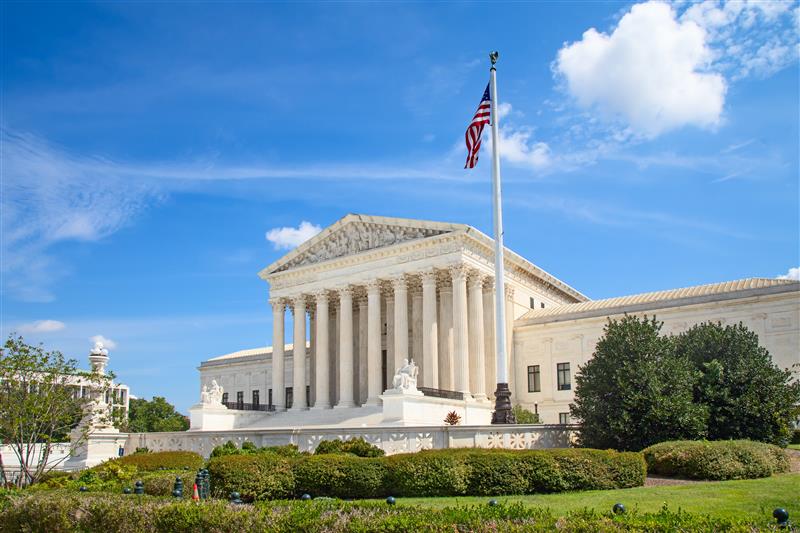
Seven years have passed since the U.S. Supreme Court issued its landmark ruling in Janus v. AFSCME affirming the First Amendment right of every public-sector employee to decline union membership and dues without losing their job.
But walk into almost any government workplace today and ask employees a basic question — “Did you know you can stop paying union dues?” — and the answers are often stunning.
An unconscionable number say they had no idea. Many don’t believe what they’re hearing and still believe they can be fired for bucking the union.
None of which is true.
In fact, the right to opt out is covered by the U.S. Constitution’s First Amendment protections for freedom of expression and association. Janus didn’t create the right out of thin air; it merely affirmed what had been true since 1787.
Yet wherever our canvassing teams go, workers relate the same story: Not only are unions not informing members of their constitutional rights, but they’re being actively suppressed.
To state the obvious, union leaders don’t represent workers. They represent their own financial and political interests.
That distinction matters.
Union representatives are employees of the union organization. Their salaries, benefits and careers are funded by the dues dollars extracted every month from union members.
When workers stop paying dues, union revenue shrinks, leaving less of it to line the pockets of union leaders and the politicians they corrupt with someone else’s money.
In other words, workers’ paychecks fund the very people whose job is to persuade them to keep paying.
This creates a clear conflict of interest.
Imagine hiring a financial advisor whose fees depend on convincing you to keep buying the same investment no matter how poorly it performs. Or a car mechanic who gets paid only if you never stop bringing the same car back into the shop. Or a restaurant critic whose salary is funded entirely by the restaurant he’s supposed to review.
When someone’s job depends on a particular outcome, he or she is naturally going to push for that outcome.
And when union staff are paid with dues money, they’re incentivized to keep the dues flowing.
A good product sells itself, but the unions clearly have no confidence in the representation services they’re selling.
And with good reason.
If every union-represented employee fully understood they didn’t have to pay dues, huge numbers of them wouldn’t.
If that happened, unions would have to compete for workers’ support rather than simply assuming it. You know, the way things work in the real world.
But competition requires transparency. And transparency becomes uncomfortable when an organization’s funding depends on workers continuing to pay.
The law is unequivocal: The decision to financially support a public-sector union belongs to each individual worker.
Employers cannot fire someone for refusing to pay union dues. A worker’s job, pay and benefits do not depend on financially supporting a private organization.
If a union truly represents workers’ interests, it shouldn’t have any trouble earning voluntary support.
Public employees work hard for their paychecks. They deserve clear information and the freedom to decide how their money is spent — without fear of retribution or discrimination for expecting an itemized receipt.
Union officials shouldn’t be the ones making that decision for them.
(Editor’s note: Peter Straka, Butch Cassidy and Caleb Stokes contributed to this blog.)